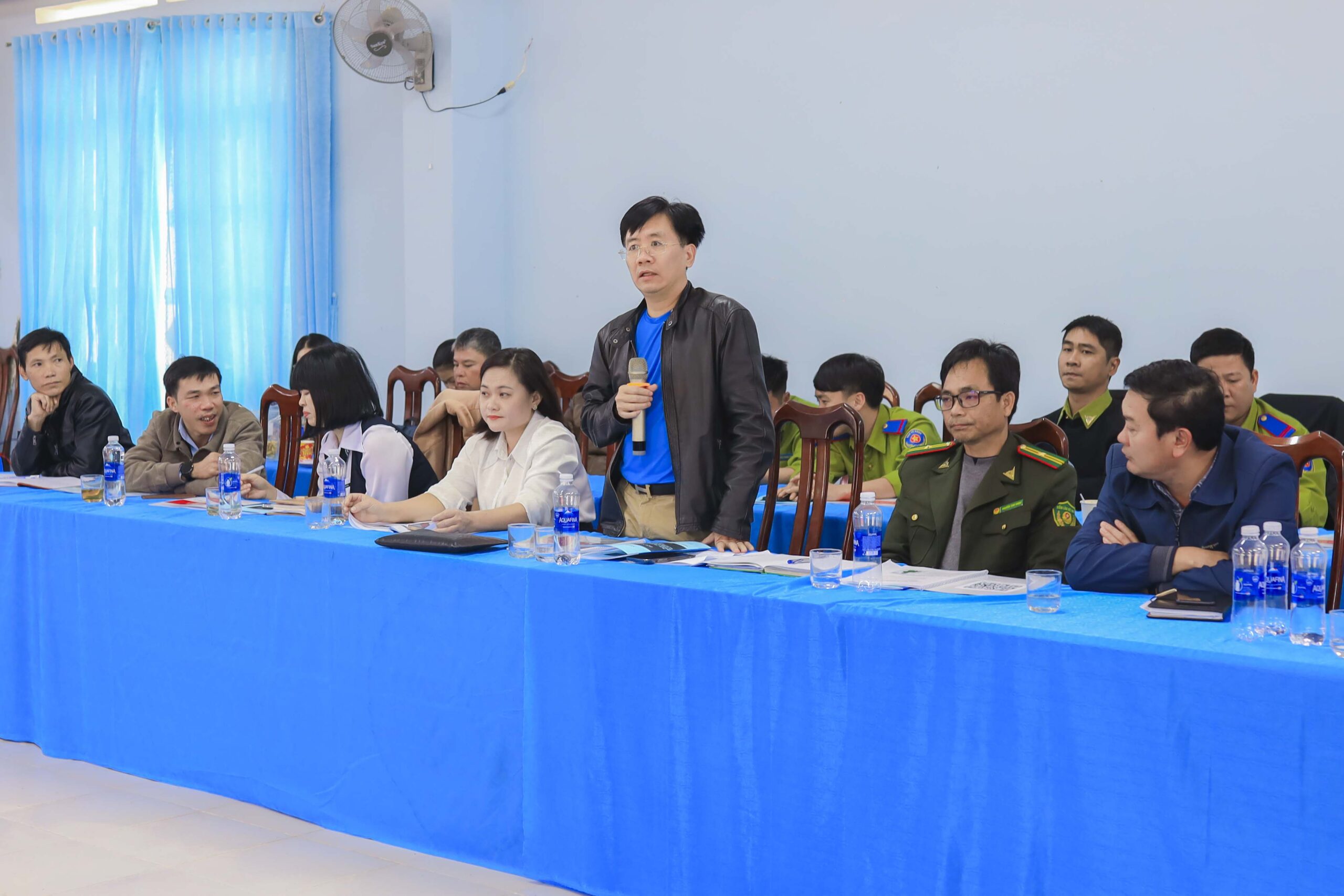
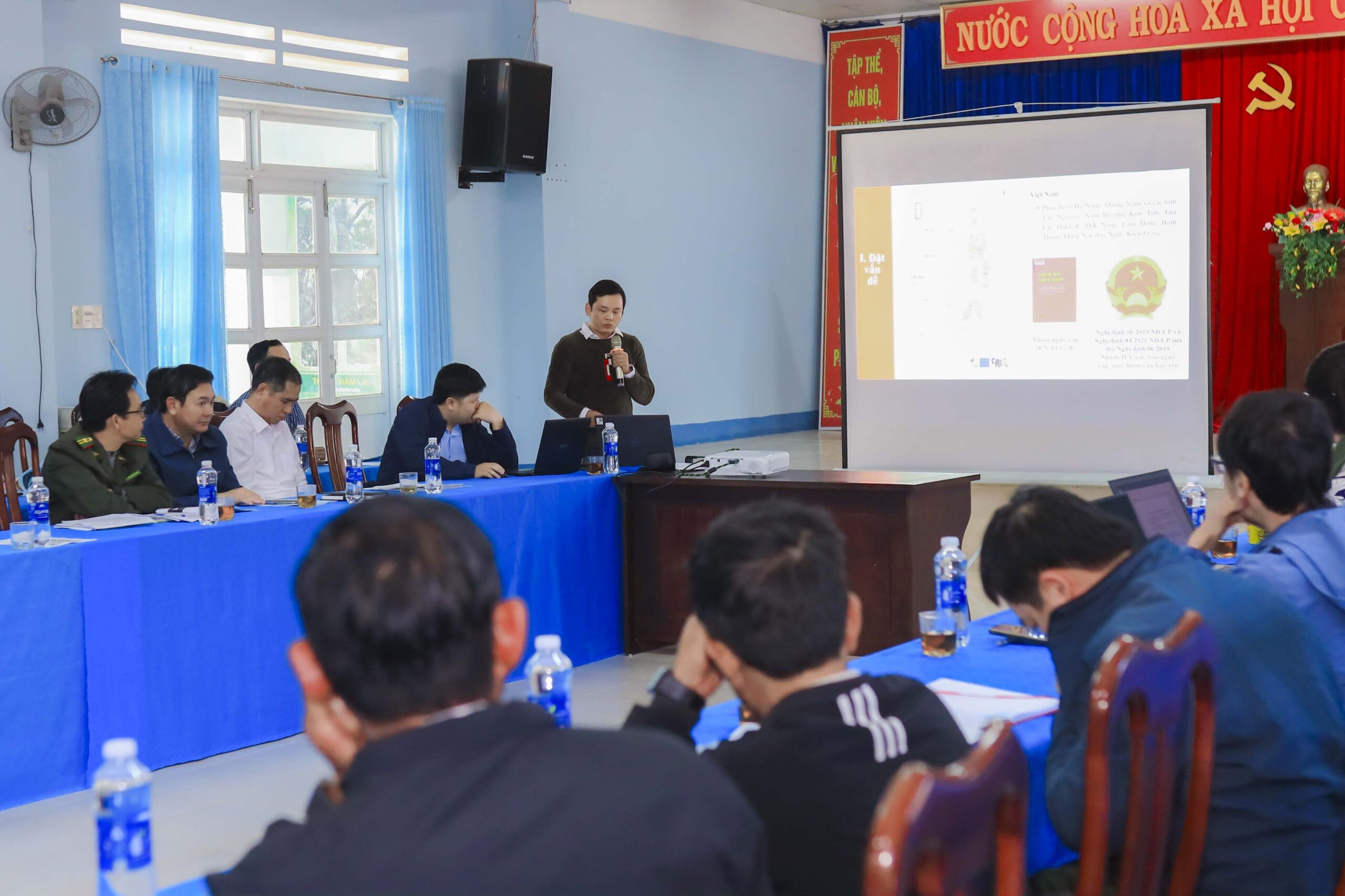
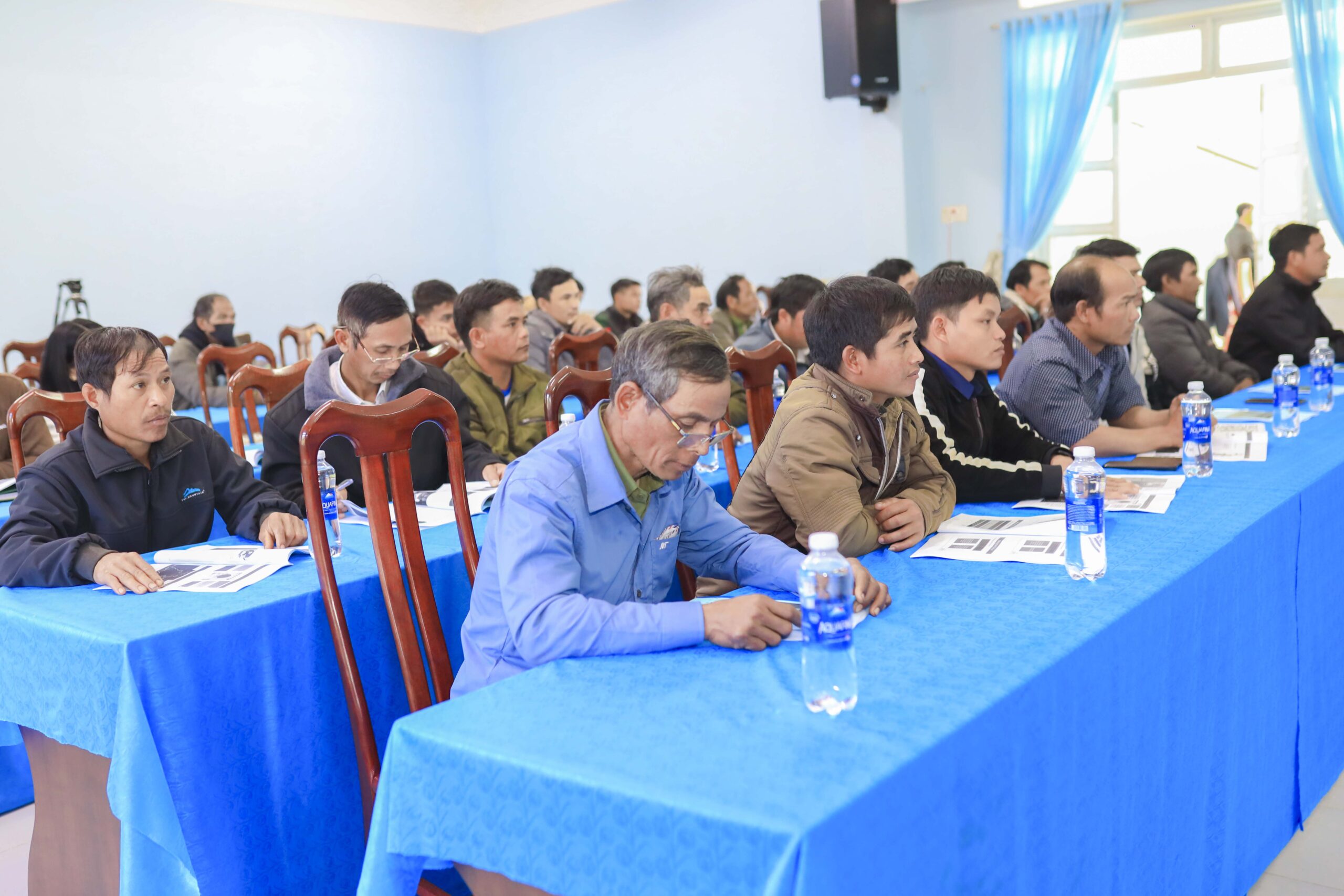
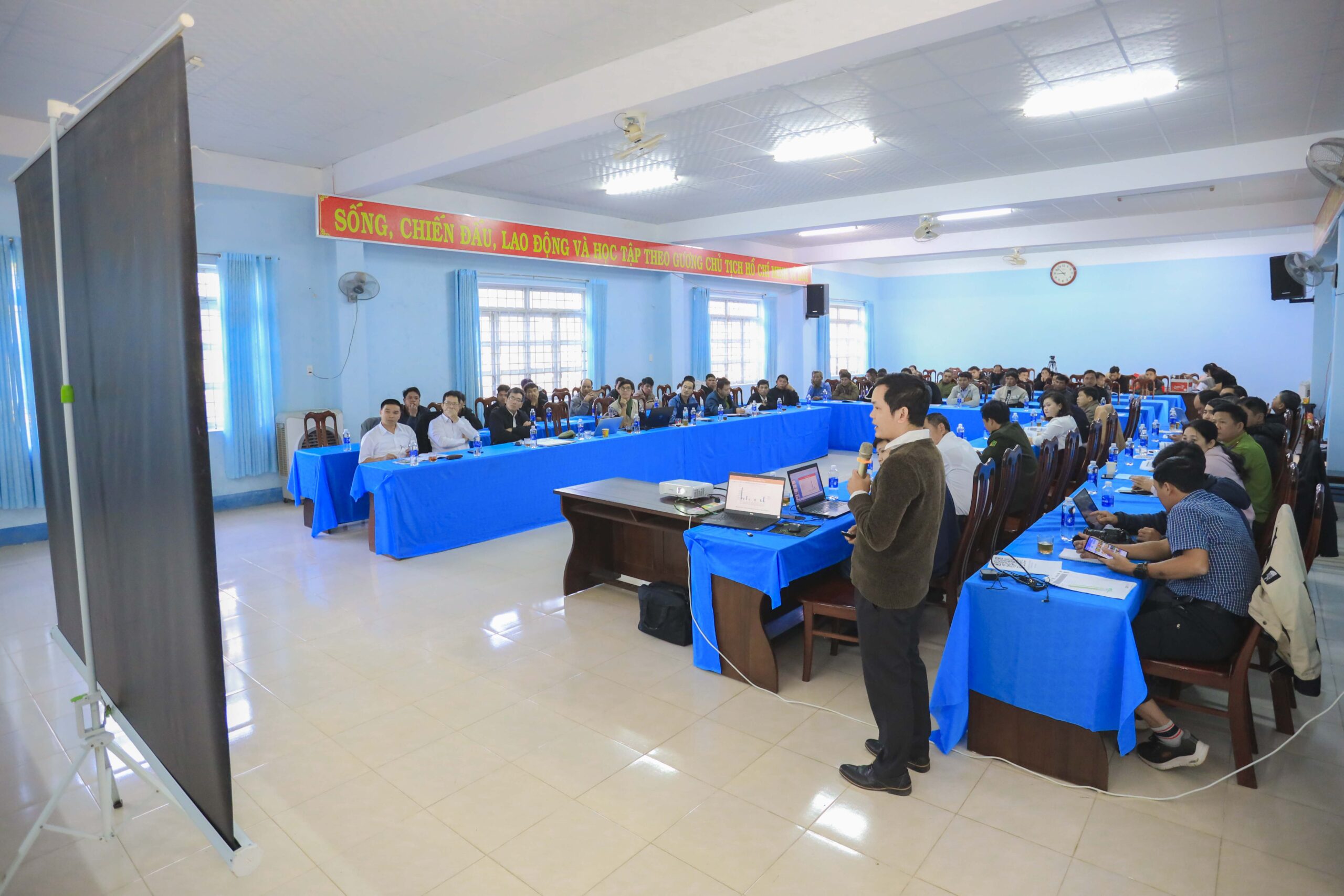
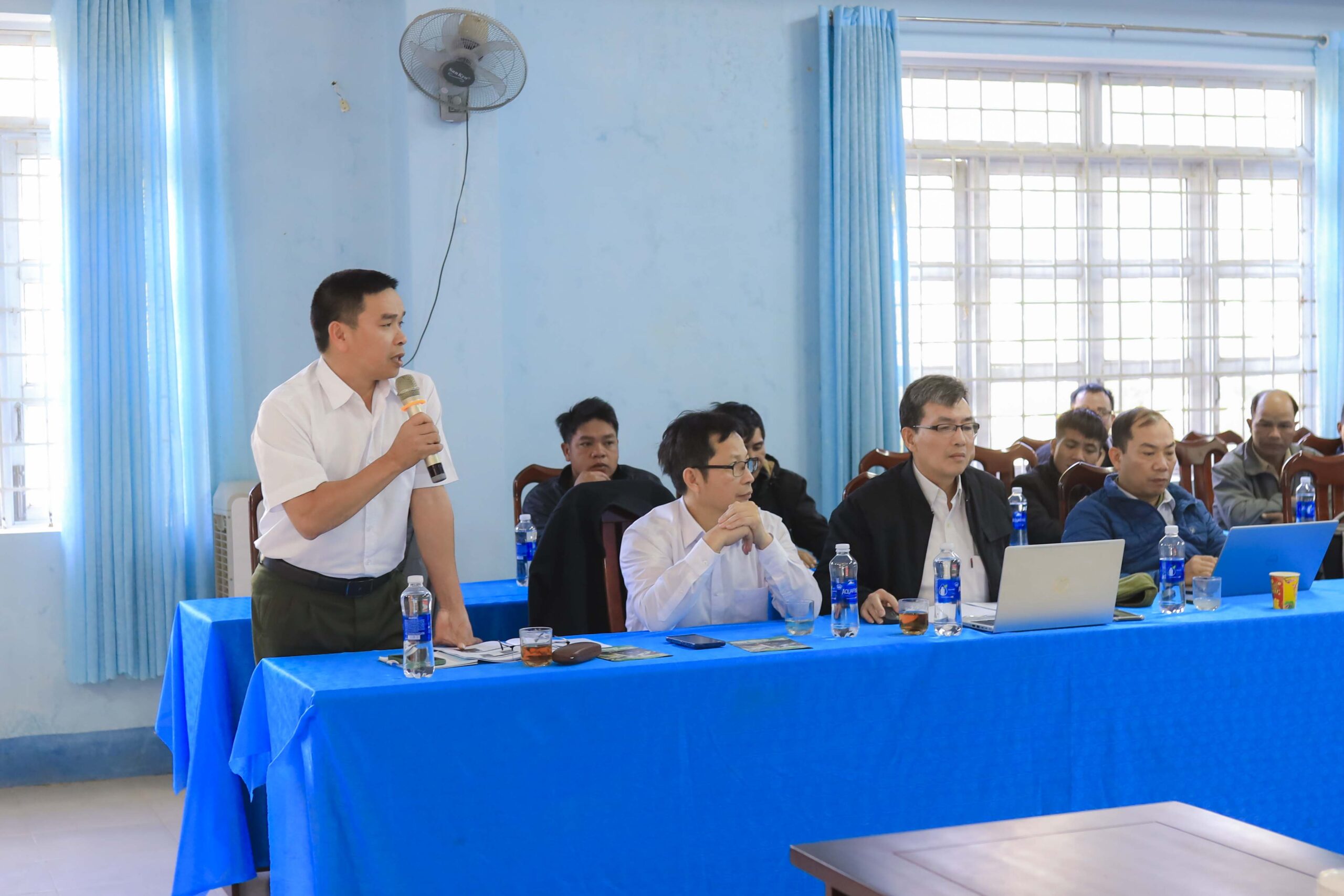
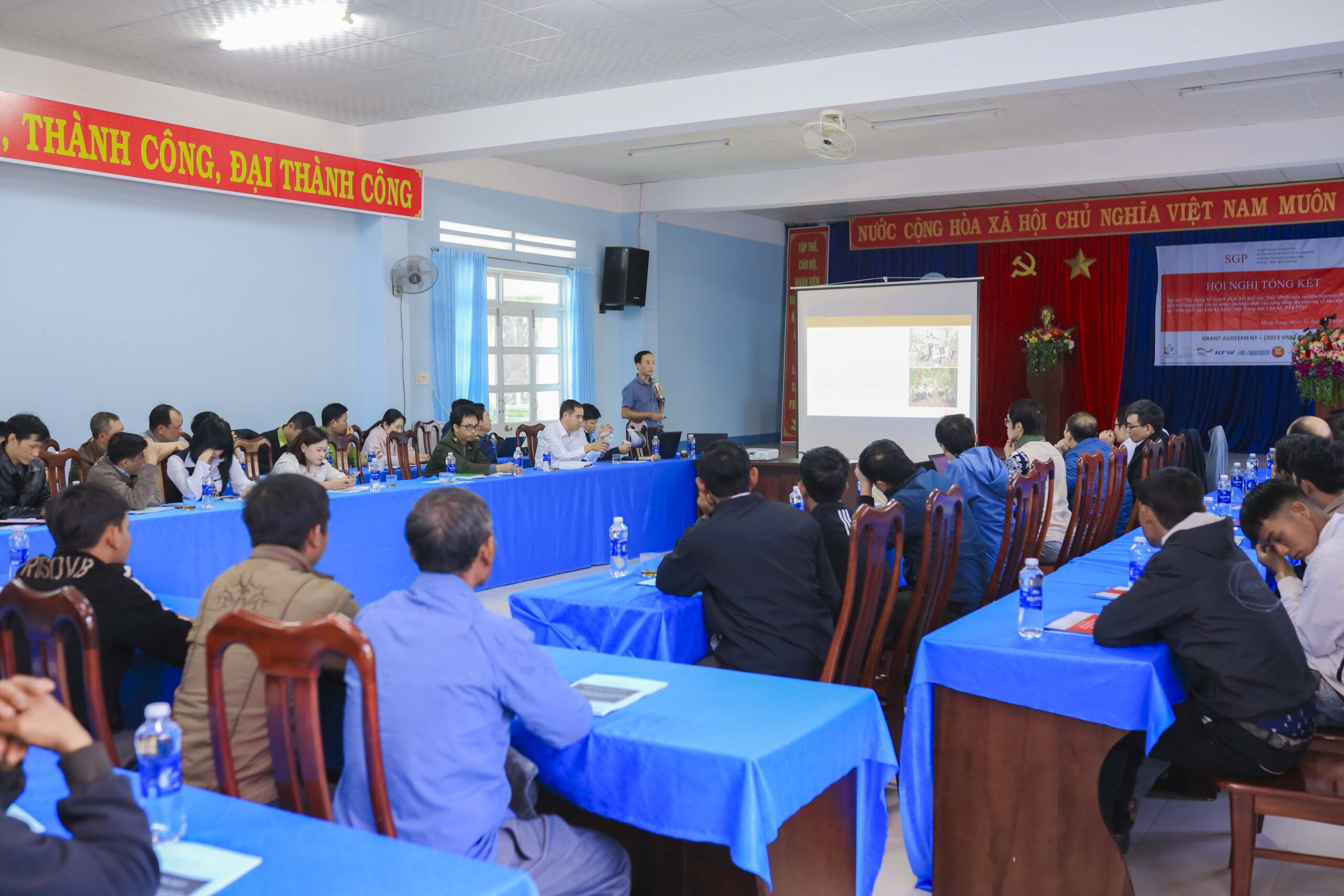
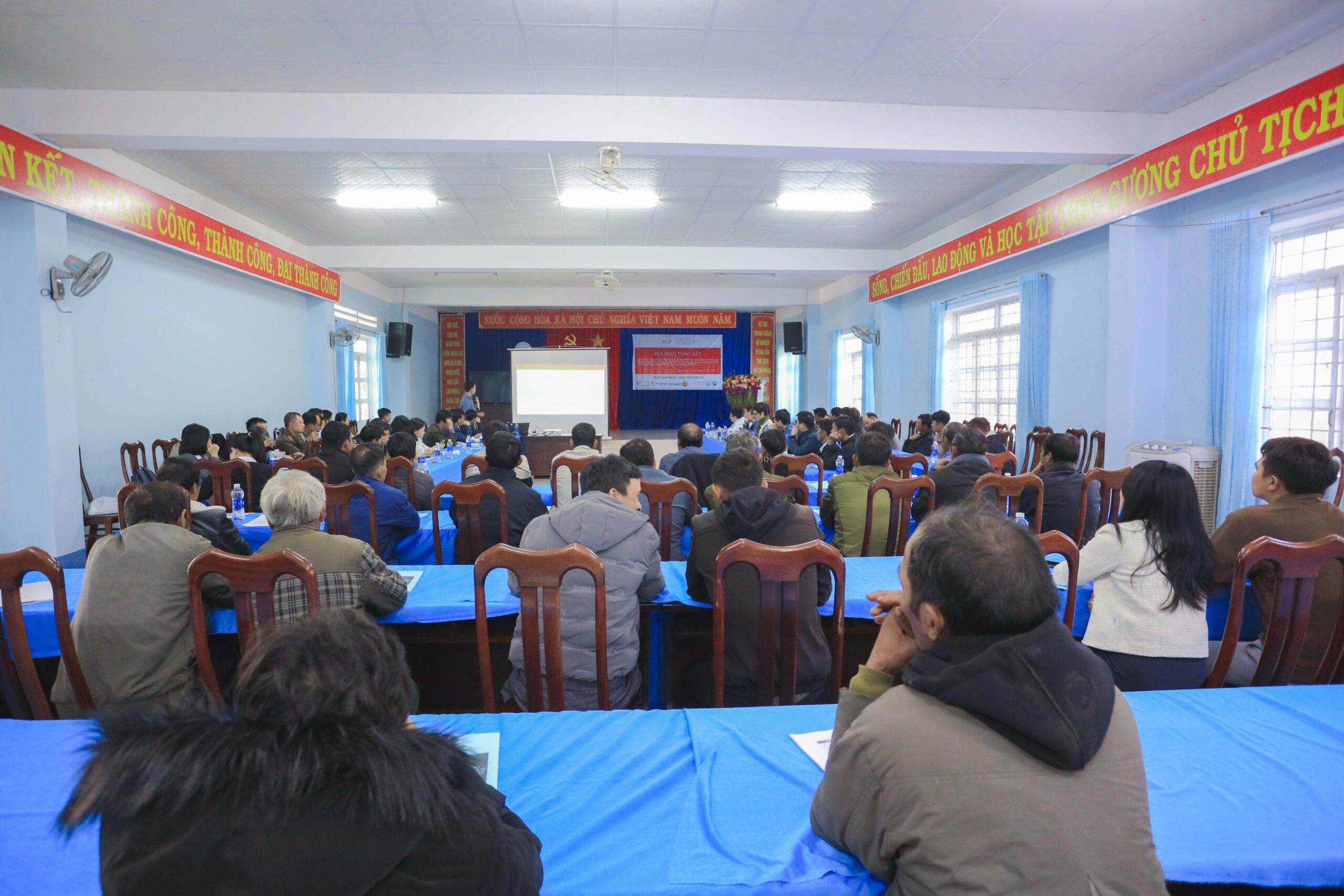
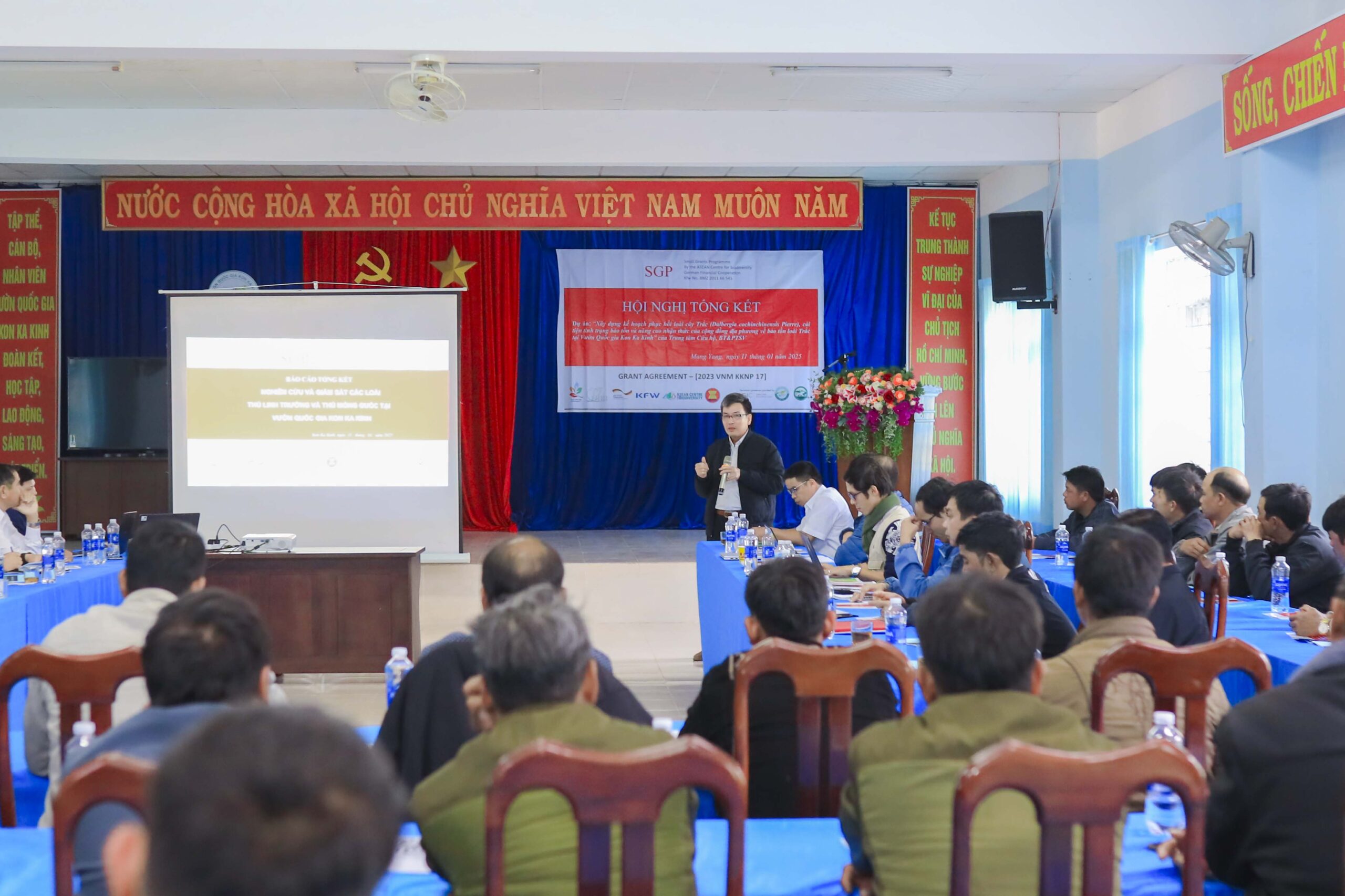
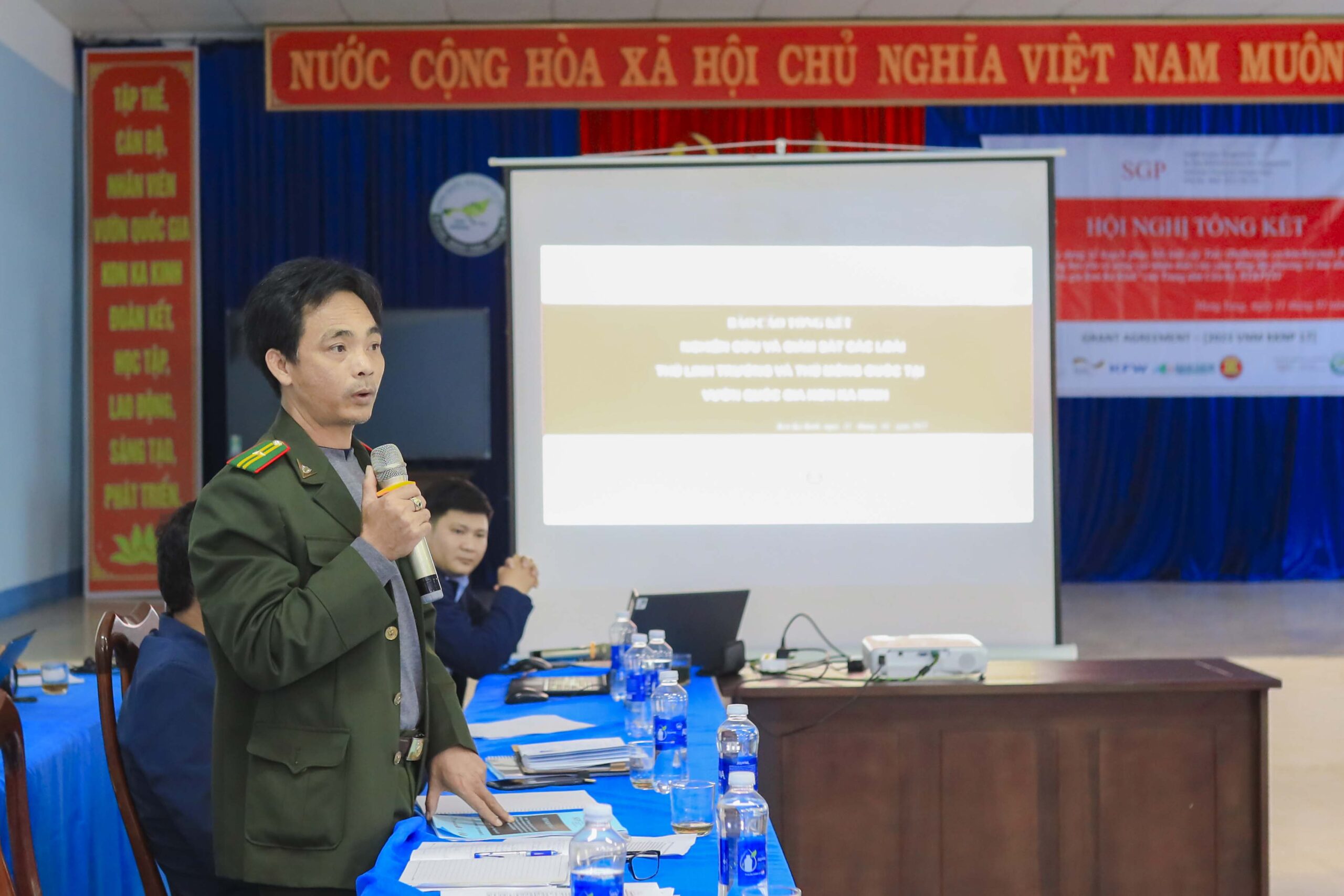
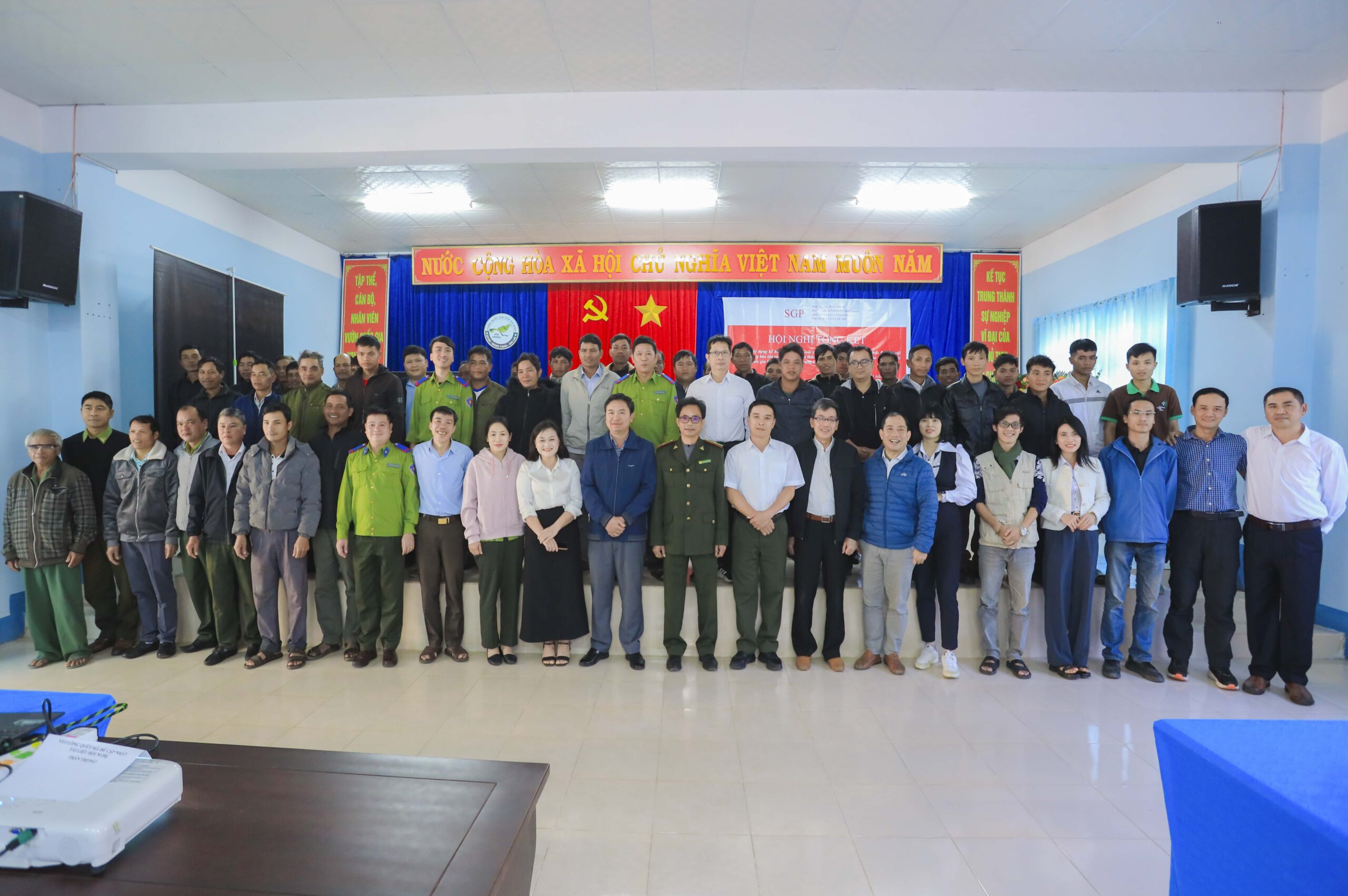
𝑂𝑛 𝐽𝑎𝑛𝑢𝑎𝑟𝑦 11, 2025, 𝑎𝑡 𝐾𝑜𝑛 𝐾𝑎 𝐾𝑖𝑛ℎ 𝑁𝑎𝑡𝑖𝑜𝑛𝑎𝑙 𝑃𝑎𝑟𝑘 – 𝐾𝐾𝐾𝑁𝑃 (𝐺𝑖𝑎 𝐿𝑎𝑖 𝑝𝑟𝑜𝑣𝑖𝑛𝑐𝑒), 𝑡ℎ𝑒 𝑡𝑤𝑜 (02) 𝑐𝑙𝑜𝑠𝑖𝑛𝑔 𝑤𝑜𝑟𝑘𝑠ℎ𝑜𝑝𝑠 𝑜𝑓 𝑡ℎ𝑒 02 𝑆𝑚𝑎𝑙𝑙 𝐺𝑟𝑎𝑛𝑡𝑠 (𝑆𝐺𝑠) 𝑤𝑒𝑟𝑒 𝑜𝑟𝑔𝑎𝑛𝑖𝑧𝑒𝑑 𝑡𝑜 𝑠ℎ𝑎𝑟𝑒 𝑡ℎ𝑒 𝑝𝑟𝑜𝑗𝑒𝑐𝑡 𝑟𝑒𝑠𝑢𝑙𝑡𝑠, 𝑒𝑥𝑝𝑒𝑟𝑖𝑒𝑛𝑐𝑒𝑠 𝑎𝑛𝑑 𝑙𝑒𝑠𝑠𝑜𝑛𝑠 𝑙𝑒𝑎𝑟𝑛𝑡 𝑤𝑖𝑡ℎ 𝑠𝑡𝑎𝑘𝑒ℎ𝑜𝑙𝑑𝑒𝑟𝑠.
The small grant entitled “𝐷𝑒𝑣𝑒𝑙𝑜𝑝 𝑎 𝑝𝑙𝑎𝑛 𝑡𝑜 𝑟𝑒𝑠𝑡𝑜𝑟𝑒 𝑡ℎ𝑒 𝐷𝑎𝑙𝑏𝑒𝑟𝑔𝑖𝑎 𝑐𝑜𝑐ℎ𝑖𝑛𝑐ℎ𝑖𝑛𝑒𝑛𝑠𝑖𝑠 𝑃𝑖𝑒𝑟𝑟𝑒 𝑠𝑝𝑒𝑐𝑖𝑒𝑠, 𝑖𝑚𝑝𝑟𝑜𝑣𝑒 𝑐𝑜𝑛𝑠𝑒𝑟𝑣𝑎𝑡𝑖𝑜𝑛 𝑠𝑡𝑎𝑡𝑢𝑠, 𝑎𝑛𝑑 𝑟𝑎𝑖𝑠𝑒 𝑎𝑤𝑎𝑟𝑒𝑛𝑒𝑠𝑠 𝑜𝑓 𝑙𝑜𝑐𝑎𝑙 𝑐𝑜𝑚𝑚𝑢𝑛𝑖𝑡𝑖𝑒𝑠 𝑜𝑛 𝑐𝑜𝑛𝑠𝑒𝑟𝑣𝑎𝑡𝑖𝑜𝑛 𝑜𝑓 𝑡ℎ𝑒 𝑠𝑝𝑒𝑐𝑖𝑒𝑠 𝑖𝑛 𝐾𝑜𝑛 𝐾𝑎 𝐾𝑖𝑛ℎ 𝑁𝑎𝑡𝑖𝑜𝑛𝑎𝑙 𝑃𝑎𝑟𝑘” (GA No. 2023 VNM KKNP 17) has been implemented by Center for Rescue, Conservation and Creature Development – Kon Ka Kinh National Park (CRCCD). The project aimed to improve the conservation status of 𝐷𝑎𝑙𝑏𝑒𝑟𝑔𝑖𝑎 𝑐𝑜𝑐ℎ𝑖𝑛𝑐ℎ𝑖𝑛𝑒𝑛𝑠𝑖𝑠 species and raise awareness of the local community on the conservation of the species in Kon Ka Kinh National Park.
The small grant entitled “𝑅𝑒𝑠𝑒𝑎𝑟𝑐ℎ𝑒𝑟 𝑎𝑛𝑑 𝑚𝑜𝑛𝑖𝑡𝑜𝑟𝑖𝑛𝑔 𝑜𝑓 𝑢𝑛𝑔𝑢𝑙𝑎𝑡𝑒𝑠 𝑎𝑛𝑑 𝑝𝑟𝑖𝑚𝑎𝑡𝑒’𝑠 𝑠𝑝𝑒𝑐𝑖𝑒𝑠 𝑖𝑛 𝑡ℎ𝑒 𝐾𝑜𝑛 𝐾𝑎 𝐾𝑖𝑛ℎ 𝑁𝑎𝑡𝑖𝑜𝑛𝑎𝑙 𝑃𝑎𝑟𝑘, 𝐺𝑖𝑎 𝐿𝑎𝑖 𝑃𝑟𝑜𝑣𝑖𝑛𝑐𝑒, 𝑉𝑖𝑒𝑡𝑛𝑎𝑚” (GA No: 2023 VNM KKNP 20), has been implemented by Frankfurt Zoological Society in Vietnam (FZS). The project focused on monitoring and research on ungulates and primates to improve wildlife protection in the Kon Ka Kinh National Park. A monitoring plan for three endangered species of the park is developed and then be implemented by well-trained park’s staff.
The closing workshops were attended by the representatives of KKKNP, beneficiaries, Department of Forest Ranger of 03 districts of Mang Yang, Dak Doa and Kbang, Project Management Unit of SGP II in Vietnam (PMU) – Nature and Biodiversity Conservation Agency – Ministry of Natural Resources and Environment, Assistant Chief Technical Advisor (ACTA) of SGP II, HUSTA, CRCCD and FZS.
The key participants are as follows:
– Dr. Nguyen Xuan Dung, Deputy Director of the Project Management Unit of SGP II in Vietnam (PMU);
– Mr. Ngo Van Thang, Director of Kon Ka Kinh National Park;
– Mr. Ha Van Hung – ACTA (GITEC consulting);
– Dr. Ho Dac Thai Hoang, Chief Grant Manager of the Service Provider (SP) and Chairman of Hue Union of Science and Technology Associations (HUSTA);
– Mr. Tran Van Thu, Project Manager of CRCCD;
– Dr. Ha Thang Long, Project Manager of FZS;
– Mr. Nguyen Duy Ngoc (Deputy Head of Department of Forest Ranger in Mang Yang district);
– Mr. Nguyen Minh Chinh (Head of Forest Protection No. 4);
– 36 local people are representative of beneficiaries in 18 buffer zone villages.
The key results of the project implemented by CRCCD are described as follows:
– Updated database on the current status, distribution of the 𝐷𝑎𝑙𝑏𝑒𝑟𝑔𝑖𝑎 𝑐𝑜𝑐ℎ𝑖𝑛𝑐ℎ𝑖𝑛𝑒𝑛𝑠𝑖𝑠 Pierre species, and exploitation & trading situation (e.g., mapping, 1,152 mature trees recorded in surveyed area, trading activity) and developed action plan for species restoration in KKKNP for the years of 2025-2030.
– Planted 01-hectare of 𝐷𝑎𝑙𝑏𝑒𝑟𝑔𝑖𝑎 𝑐𝑜𝑐ℎ𝑖𝑛𝑐ℎ𝑖𝑛𝑒𝑛𝑠𝑖𝑠 trees at plot 5, sub-zone 435 of KKKNP (in-situ conservation); 54,000 seedlings provided to 18 buffer zone villages for scattered planting (ex-situ conservation).
– Enhanced capacity for 540 local people on planting and caring techniques of the 𝐷𝑎𝑙𝑏𝑒𝑟𝑔𝑖𝑎 𝑐𝑜𝑐ℎ𝑖𝑛𝑐ℎ𝑖𝑛𝑒𝑛𝑠𝑖𝑠 seedlings in 18 buffer zone villages (18 training courses).
– Raised awareness for 720 local people in 18 buffer zone villages on protection and restoration of 𝐷𝑎𝑙𝑏𝑒𝑟𝑔𝑖𝑎 𝑐𝑜𝑐ℎ𝑖𝑛𝑐ℎ𝑖𝑛𝑒𝑛𝑠𝑖𝑠 species (18 dissemination sessions).
The key results of the project implemented by FZS are described as follows:
* 𝐒𝐩𝐞𝐜𝐢𝐞𝐬 𝐝𝐚𝐭𝐚𝐛𝐚𝐬𝐞𝐬
𝐂𝐚𝐦𝐞𝐫𝐚 𝐭𝐫𝐚𝐩𝐬
– Captured 18,925 photos from 64 camera traps (16 cameras purchased from the project). Recorded from camera traps 04 ungulate species (𝑆𝑢𝑠 𝑠𝑐𝑟𝑜𝑓𝑎, 𝑀𝑢𝑛𝑡𝑖𝑎𝑐𝑢𝑠 𝑡𝑟𝑢𝑜𝑛𝑔𝑠𝑜𝑛𝑒𝑛𝑠𝑖𝑠, 𝑀𝑢𝑛𝑖𝑡𝑎𝑐𝑢𝑠 𝑚𝑢𝑛𝑡𝑗𝑎𝑐 𝑎𝑛𝑛𝑎𝑚𝑒𝑛𝑠𝑖𝑠, 𝐶𝑎𝑝𝑟𝑖𝑐𝑜𝑟𝑛𝑖𝑠 𝑠𝑢𝑚𝑎𝑡𝑟𝑎𝑒𝑛𝑠𝑖𝑠), 03 primate species (𝑃𝑦𝑔𝑎𝑡ℎ𝑟𝑖𝑥 𝑐𝑖𝑛𝑒𝑟𝑒𝑎, 𝑀𝑎𝑐𝑎𝑐𝑎 𝑙𝑒𝑜𝑛𝑖𝑛𝑎, 𝑀𝑎𝑐𝑎𝑐𝑎 𝑎𝑟𝑐𝑡𝑜𝑖𝑑𝑒𝑠) and 23 other animal species.
𝐋𝐢𝐧𝐞 𝐭𝐫𝐚𝐧𝐬𝐞𝐜𝐭 𝐬𝐮𝐫𝐯𝐞𝐲
– 𝑃𝑦𝑔𝑎𝑡ℎ𝑟𝑖𝑥 𝑐𝑖𝑛𝑒𝑟𝑒𝑎 species is estimated to have 242 groups and 1894 individuals in KKKNP.
– Observed 02 groups of 𝑀𝑎𝑐𝑎𝑐𝑎 𝑙𝑒𝑜𝑛𝑖𝑛𝑒 and 02 groups of 𝑀𝑎𝑐𝑎𝑐𝑎 𝑎𝑟𝑐𝑡𝑜𝑖𝑑𝑒𝑠.
– Observed 09 individuals of 𝑁𝑦𝑐𝑡𝑖𝑐𝑒𝑏𝑢𝑠 𝑝𝑦𝑔𝑚𝑎𝑒𝑢𝑠 (estimated density is 0.103 individual/km)
𝐁𝐢𝐨𝐚𝐜𝐨𝐮𝐬𝐭𝐢𝐜 𝐫𝐞𝐜𝐨𝐫𝐝𝐢𝐧𝐠
– Recorded 15 𝑁𝑜𝑚𝑎𝑠𝑐𝑢𝑠 𝑎𝑛𝑛𝑎𝑚𝑒𝑛𝑠𝑖𝑠 groups.
– 𝑁𝑜𝑚𝑎𝑠𝑐𝑢𝑠 𝑎𝑛𝑛𝑎𝑚𝑒𝑛𝑠𝑖𝑠 species is estimated to have 42 groups and 148 individuals in KKKNP.
Distribution map of ungulates and primates.
𝐎𝐭𝐡𝐞𝐫 𝐫𝐞𝐬𝐮𝐥𝐭𝐬
– Enhanced capacity for 40 parks’ staff on survey techniques and wildlife monitoring methods (incl. GIS and RS) focusing on primates and ungulates.
– Monitoring plan for target species developed.
– Updated ungulate and primate data to the National Database on Biodiversity (NDB).
– Submitted 02 papers to scientific journal (01 accepted and 01 under revision).
The closing workshops provided an opportunity for CRCCD and FZS to share the project results, experiences and lessons learnt, propose solutions, and discuss with stakeholders on sustainable conservation efforts at Kon Ka Kinh National Park.